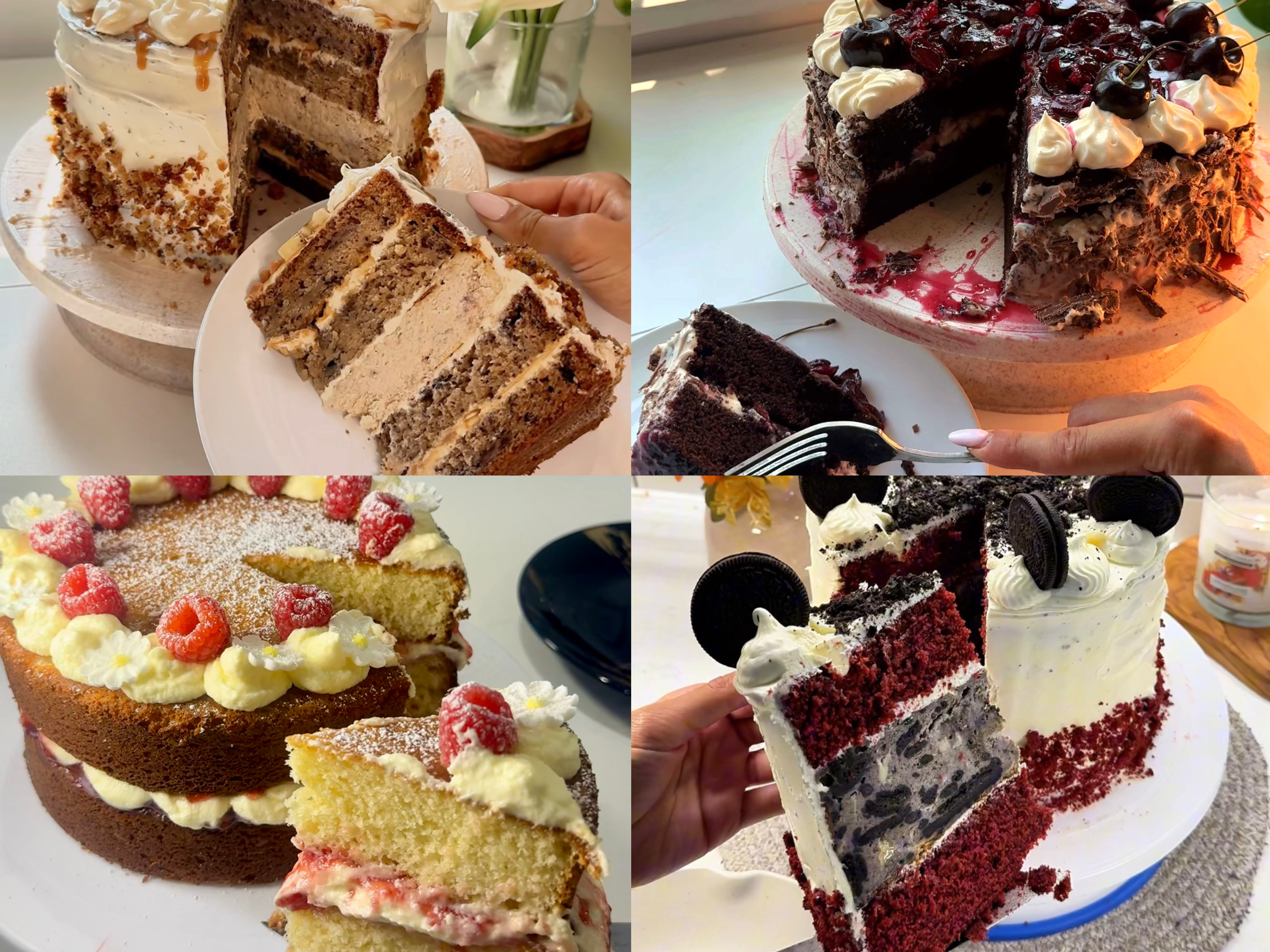
There are few things more disappointing than spending hours making a cake only to cut into it and find that it’s dry, heavy or nowhere near as fluffy as you imagined.
The good news is that soft, moist cake isn’t about having some secret professional baking technique. Usually, it comes down to a handful of small things: how you measure your ingredients, the temperature of your butter and eggs, how much you mix your batter and even how long you leave the cake in the oven.
These are the tips I come back to whenever I’m baking cakes at home, and they can make such a difference to the final texture.
1. Start with room-temperature ingredients
If a recipe calls for room-temperature butter, eggs or dairy, there’s usually a reason.
Ingredients at a similar temperature combine much more easily, helping you create a smooth, evenly mixed batter. Cold eggs added to softened butter, for example, can cause the mixture to split or curdle.
For butter cakes, I normally take my butter and eggs out of the fridge before I start preparing everything else.
Your butter should be soft enough to press with your finger but not melted or greasy. If it’s practically turning into a puddle on the counter, it’s gone a little too far.
2. Measure your ingredients accurately
Baking is much less forgiving than cooking.
A little extra flour might not seem important, but too much can quickly turn what should have been a beautifully soft cake into a dry one.
A digital kitchen scale is the easiest way to get consistent results, especially when measuring flour.
If you are using cups, avoid scooping flour directly from the bag and packing it into the cup. Fluff the flour first, spoon it gently into your measuring cup and level the top.
And yes, I know washing the scales is one more thing to do, but your cake will thank you. 🤭
3. Cream your butter and sugar properly
For cakes that begin by creaming butter and sugar together, don’t rush this stage.
You’re not simply combining the two ingredients. Beating them together incorporates tiny pockets of air into the mixture, which helps give the finished cake a lighter texture.
The mixture should become noticeably paler and fluffier than when you started.
Scrape down the sides of your bowl as you go so everything gets evenly incorporated.
4. Don't overmix after adding the flour
This is probably one of the easiest mistakes to make.
Once flour is added, excessive mixing develops more gluten. That’s brilliant when you're making bread and want structure and chewiness, considerably less brilliant when you want a delicate, fluffy cake.
Mix only until you can no longer see streaks of dry flour.
If I’m folding the last bit in by hand, I use a spatula and gently scrape around the bowl to make sure there aren’t any sneaky pockets of flour hiding at the bottom.
5. Use ingredients that add moisture
The ingredients in your recipe have a huge effect on how moist the finished cake will be.
Oil, butter, yoghurt, sour cream, buttermilk, fruit and brown sugar can all contribute to moisture in different ways.
Fruit-based cakes are a great example. Mashed banana or grated apple doesn't just add flavour, it can also help create an incredibly soft, moist crumb.
That’s one of the reasons cakes such as banana cake, carrot cake and apple cake can stay beautifully moist for days.
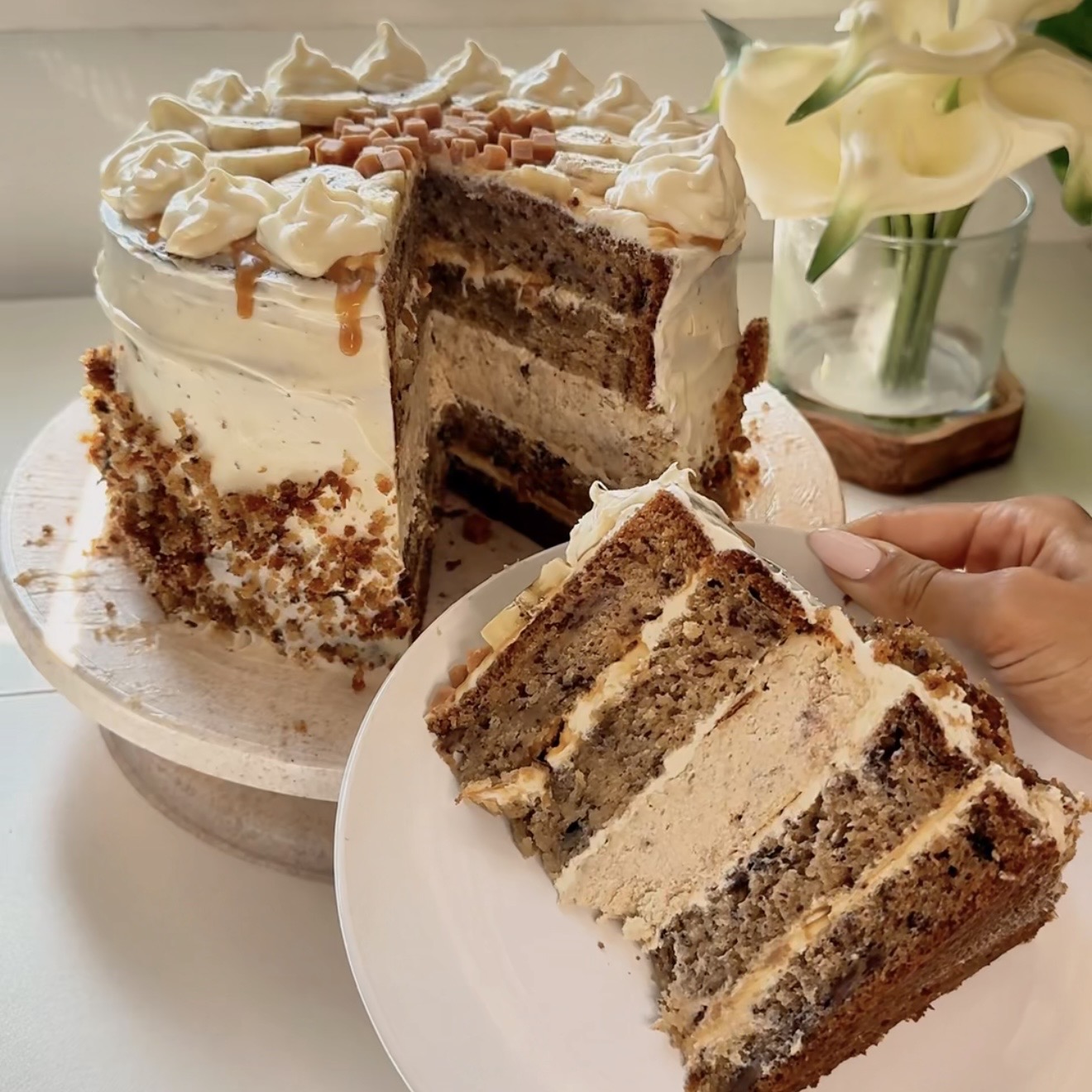
Try this recipe
Banana Cheesecake Cake
A soft banana cake layered with salted caramel, fudge and a creamy caramelised banana cheesecake centre.
View recipe →
6. Make sure your raising agents are still fresh
Baking powder and bicarbonate of soda don't last forever.
If your cakes suddenly aren't rising the way they normally do, even though you haven't changed the recipe, check how long that little tub has been sitting in the cupboard.
Your raising agents are responsible for producing the gases that help the batter expand in the oven. If they're no longer effective, you can end up with a much denser cake.
Also, don't assume that adding more baking powder will make a cake extra fluffy. Too much can cause a cake to rise rapidly and then collapse. It can leave an unpleasant taste.
7. Preheat the oven properly
I'm guilty of wanting to get things in the oven as quickly as possible too, but give it time to actually reach the correct temperature.
Putting cake batter into an oven that isn't hot enough can affect how the cake rises and sets.
Ideally, preheat your oven before you start making the batter so it's ready by the time you've filled your tins.
And once your cake is in there, try not to keep opening the door to have a look. Every time the oven door opens, heat escapes.
The little oven-window stare will have to do. 😂
8. Don't overbake your cake
This is a big one.
Even the best cake recipe can become dry if it's left in the oven for too long.
Recipe baking times should be treated as a guide because ovens, cake tins and even the position of the tin inside the oven can affect how quickly a cake bakes.
Start checking around the earliest suggested baking time.
- ♡A nicely risen centre
- ♡Edges beginning to pull very slightly from the tin
- ♡A skewer coming out clean or with a few moist crumbs
- ♡The centre springing back gently when touched
9. Use the correct size cake tin
Cake tin size matters more than you might think.
If you put batter designed for an 8-inch tin into a much larger tin, you'll create a thinner cake that will bake much more quickly.
Put too much batter into a smaller tin and you have the opposite problem: the outside can cook while the middle is still raw.
If you're changing the tin size given in a recipe, expect to adjust the baking time too.
10. Let your cakes cool properly
Once your cake comes out of the oven, leave it in its tin for the amount of time recommended in the recipe before transferring it to a cooling rack.
And please don't frost a warm cake.
I understand the temptation. You’ve waited long enough and now you want cake. 😂 But warm layers can melt buttercream and turn a lovely neat cake into a sliding mess.
Let the layers cool completely before decorating.
If I'm making a layered cake, I actually love working with completely cooled or slightly chilled layers because they're usually much easier to stack and decorate neatly.
11. Store your cake properly
You can make the softest cake in the world and then accidentally dry it out by leaving it uncovered on the kitchen counter.
Once completely cool, keep undecorated cake layers tightly wrapped until you're ready to use them.
For finished cakes, storage depends on the filling and frosting.
If you refrigerate cake, covering it properly is particularly important because the fridge can dry it out.
Why did my cake turn out dry?
If your cake is dry, the first things I would check are too much flour, too long in the oven or an oven that's running hotter than expected.
If it feels heavy and dense rather than dry, look at your mixing technique, raising agents and ingredient temperatures.
One failed cake doesn't necessarily mean the recipe is bad either. Baking has so many tiny variables that sometimes changing one small thing is enough to completely change the result.
My biggest tip? Don't rush it.
Most of the things that make a cake better aren't complicated.
Measure properly. Let your ingredients reach the right temperature. Give your butter and sugar enough time. Stop mixing once the flour is incorporated. And start checking your cake before you think it could possibly be ready.
Those little habits make baking so much more consistent, and there's nothing better than finally cutting into a cake and seeing that perfectly soft, fluffy middle. 🤍
Ready to bake?
Browse more Made By Lai J baking recipes for cakes, cosy bakes and something sweet for your next baking day.
Browse recipes →