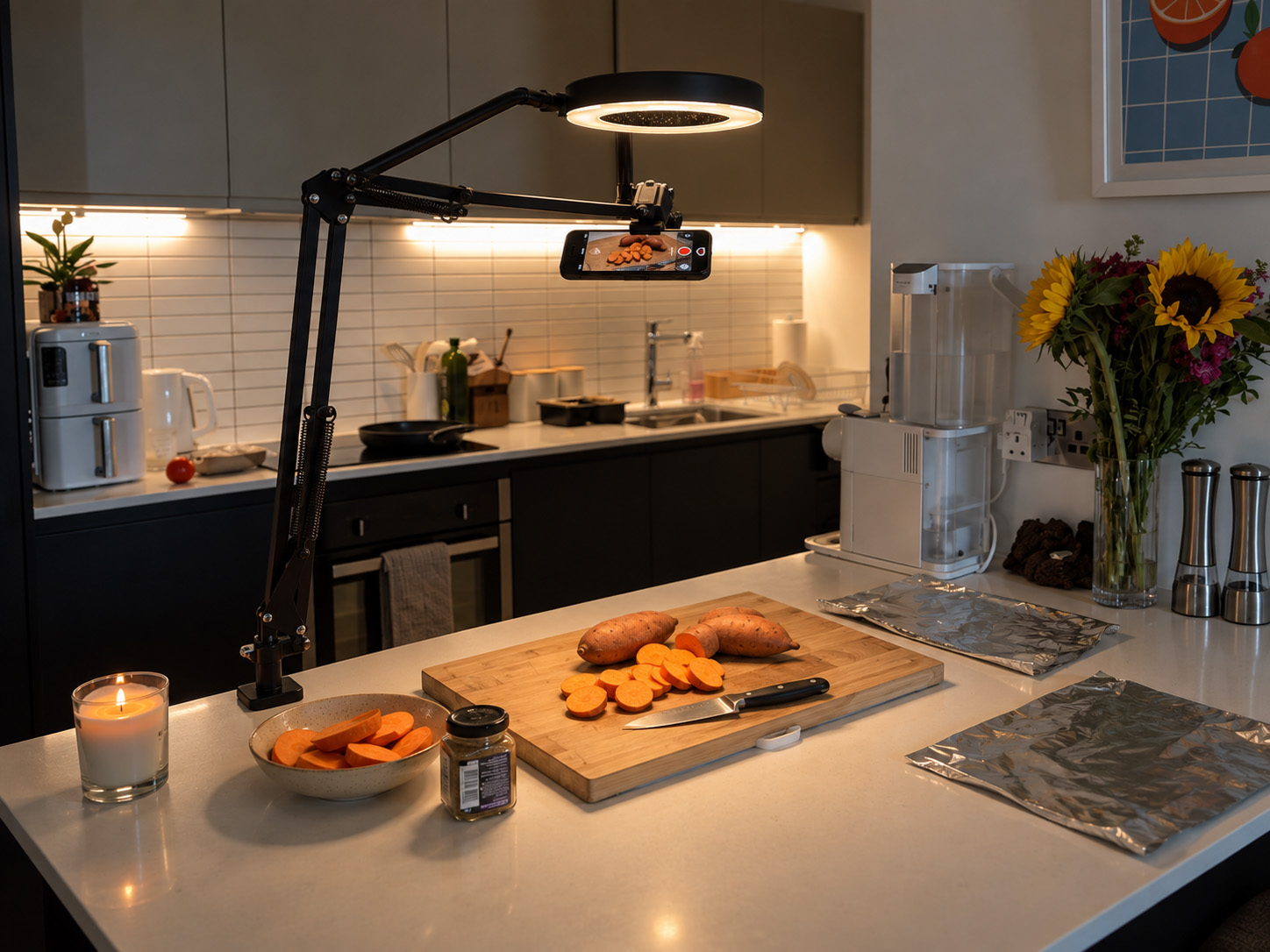
Making something delicious is one thing. Trying to make it look as good on camera as it does in real life is a completely different challenge.
The good news is that you really don't need an expensive camera, professional lights or a huge kitchen setup to create beautiful food content.
A lot of it comes down to lighting, how you arrange the food, the angle you choose and knowing which little details will make someone want to keep watching.
These are some of the things I think about when I'm photographing or filming my own recipes.
1. Start with good lighting
Lighting can completely change how food looks on camera.
Natural light is one of the easiest options to work with. If you can, position your food near a window and let the light come from the side rather than directly from above.
Side lighting helps create gentle shadows and brings out the texture in the food, which can make everything look much more dimensional.
Try to avoid mixing lots of different light sources too. Natural daylight mixed with a warm kitchen light can sometimes give your food strange colours on camera.
2. Choose a background that doesn't compete with the food
Your background should help the food stand out rather than becoming the first thing you notice.
Simple countertops, wooden boards, neutral plates and soft fabrics can all work beautifully.
That doesn't mean everything has to be plain. A few details around the plate can make a shot feel warm and lived-in, but the recipe should still be the main focus.
I usually prefer backgrounds that complement the colours in the food rather than fighting against them.
3. Think about your plate before adding the food
The plate itself can make a surprising difference.
Think about the colour and shape of the food you're serving before choosing what to put it on.
A dark plate can make lighter foods and colourful garnishes stand out, while a lighter plate can work beautifully with rich sauces or darker bakes.
You also don't need to fill every inch of the plate. Leaving some empty space can make the finished dish look much more intentional.
4. Add height and layers
Food can sometimes look quite flat on camera, especially when you're shooting from the side.
Adding a little height can instantly make a dish more interesting.
Stack pancakes, layer sandwiches, twist pasta rather than spreading it flat, or arrange roast potatoes so they aren't all sitting at exactly the same level.
For cakes, showing the layers inside can be much more tempting than only showing the outside.
5. Don't forget the finishing touches
Little finishing touches can completely transform a plate.
Fresh herbs, grated parmesan, cracked black pepper, a drizzle of sauce, icing sugar or a few crumbs can make the food look finished without needing loads of decoration.
The important thing is making sure the garnish actually belongs with the dish.
Adding something purely because it looks pretty can sometimes make the plate feel less natural.
6. Clean the edges of the plate
This is such a small detail, but once you notice it you can't stop noticing it.
Before taking your final photo or video, check the edges of the plate for fingerprints, sauce splashes or stray crumbs.
A quick wipe can make the finished shot look so much cleaner.
Obviously this doesn't mean the food needs to look completely perfect. A little mess can actually make food feel more inviting, but you want that mess to look intentional.
7. Find the best angle for the dish
Not every recipe looks its best from the same angle.
Flat dishes, grazing boards and beautifully arranged plates often work really well photographed from directly overhead.
Tall cakes, sandwiches and layered desserts usually look much better from the side because you can actually see the height and layers.
If you're not sure, try a few different angles before you start eating. You might be surprised by which one looks best.
8. Get close to the food
Wide shots are useful for showing the whole dish, but close-ups are what really show the texture.
Think melted cheese, crispy edges, glossy sauce, fluffy cake crumb or caramel dripping down the side of a slice.
For video especially, these close shots can make food feel much more tempting.
I like having a mixture of wider shots and really close detail shots so the finished video doesn't feel repetitive.
9. Show movement in your videos
Some of the most satisfying food shots involve movement.
Pouring sauce, slicing into a cake, pulling apart a cookie, sprinkling parmesan, spooning over gravy or lifting pasta with a fork can instantly make a video more interesting.
These shots also show texture in a way that a completely still plate can't.
You don't need movement in every clip. A few really good moments are usually enough.
10. Film the important shots before the food changes
Some food gives you a very small window where it looks its absolute best.
Ice cream melts, sauces thicken, cheese stops stretching and fresh herbs can wilt.
Think about the shots you absolutely need before you start filming.
If the cheese pull is the star of the recipe, get that shot while everything is still hot rather than leaving it until the end.
11. Keep your clips short
When you're filming a recipe, you usually don't need to show every action from beginning to end.
A few seconds of chopping, stirring or pouring is normally enough for the viewer to understand what's happening.
Shorter clips can make the finished video feel much more engaging and allow you to show more of the recipe without making the video unnecessarily long.
You can always keep longer clips for a more detailed recipe video.
12. Make the first shot count
The opening of a food video is really important because it's the first chance you have to make someone want to keep watching.
I usually think about which shot makes the recipe look the most tempting.
That might be cutting into a layered cake, pulling apart a sandwich, lifting glossy pasta or showing the finished plate before going back to how it was made.
You don't always have to start at the beginning of the recipe.
Do you need a professional camera for food content?
Definitely not.
A modern phone can produce really beautiful food photos and videos, especially when you have good lighting.
Learning how to use the camera you already have is much more useful than assuming expensive equipment will automatically make your content look better.
Focus on lighting, composition, styling and the story of the recipe first. You can always upgrade equipment later if you actually need to.
How do you make food look natural rather than over-styled?
I think the best food content still looks like something you'd genuinely want to sit down and eat.
You don't need every crumb perfectly placed or every ingredient arranged with tweezers.
A spoon resting beside the plate, a little sauce, a few crumbs or a partly sliced cake can make the scene feel much more inviting.
The goal isn't always perfection. It's making the food look delicious.
My biggest tip? Show what makes the recipe special
Before you start filming, think about the one thing that makes the recipe really tempting.
If it's a cake with an amazing centre, show the slice. If it's a crispy sandwich, show the crunch. If it's creamy pasta, show the sauce coating the noodles.
Once you know what the best part of the dish is, it becomes much easier to decide what you actually need to photograph and film.
You don't need a complicated setup. Good light, thoughtful styling and a few really satisfying shots can completely transform your food content. 🤍
Ready to bake?
Browse more Made By Lai J baking recipes for cakes, cosy bakes and something sweet for your next baking day.
Browse recipes →