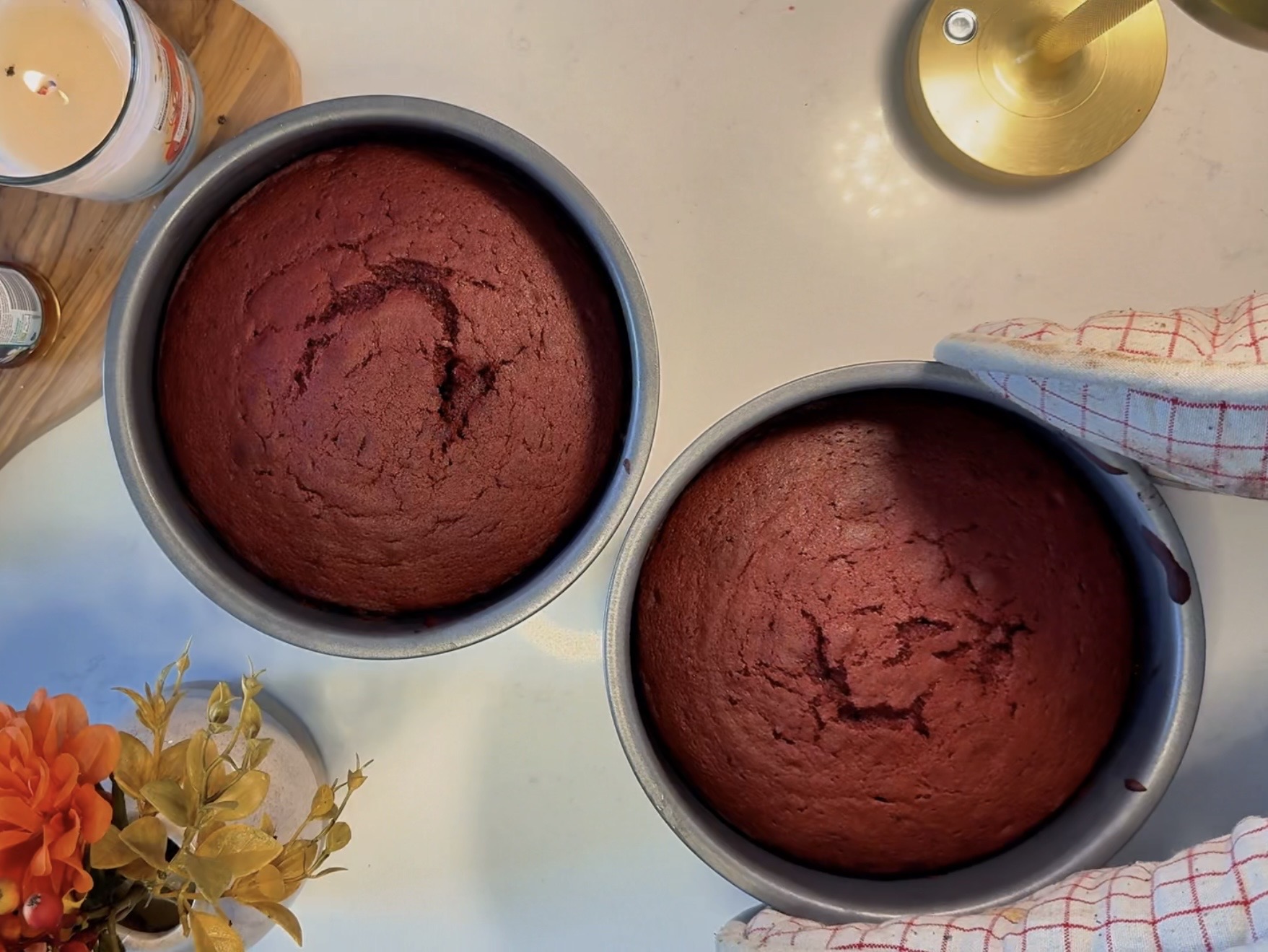
We've all had a cake come out of the oven looking nothing like the one we imagined.
Maybe the middle has sunk, the sponge is dry, the outside is cooked but the centre is still raw, or your beautifully risen cake suddenly collapses as it cools.
The annoying part is that sometimes the smallest thing can be responsible.
If your cakes aren't turning out quite how you want them to, these are some of the most common baking mistakes I would check first.
1. Measuring your flour incorrectly
Too much flour is one of the easiest ways to end up with a dry, heavy cake.
If you're measuring with cups, scooping flour directly from the bag can compact it into the cup and give you much more than the recipe actually needs.
For the most consistent results, weighing your ingredients is best. If you're using cups, spoon the flour gently into the measuring cup and level the top rather than packing it down.
2. Using ingredients straight from the fridge
If a recipe asks for room-temperature butter, eggs or dairy, try not to skip that part.
Ingredients at a similar temperature combine much more easily and help create a smoother batter.
Cold eggs added to softened butter can make the mixture look split or curdled. It might still bake, but starting with the right ingredient temperatures gives you a much better chance of getting the texture you wanted.
3. Not creaming butter and sugar for long enough
When a cake recipe tells you to cream butter and sugar together, you're doing more than simply mixing them.
Beating them together incorporates tiny pockets of air into the mixture, which helps create a lighter cake.
Give this stage a little time. The mixture should become noticeably paler and fluffier before you move on.
4. Overmixing after adding the flour
This is such an easy mistake to make, especially when you want your batter to look completely smooth.
Once flour is added, too much mixing can develop the gluten and leave you with a tougher, denser sponge.
Mix only until you can no longer see obvious streaks of dry flour. If you're finishing by hand, gently fold the last little bit through with a spatula.
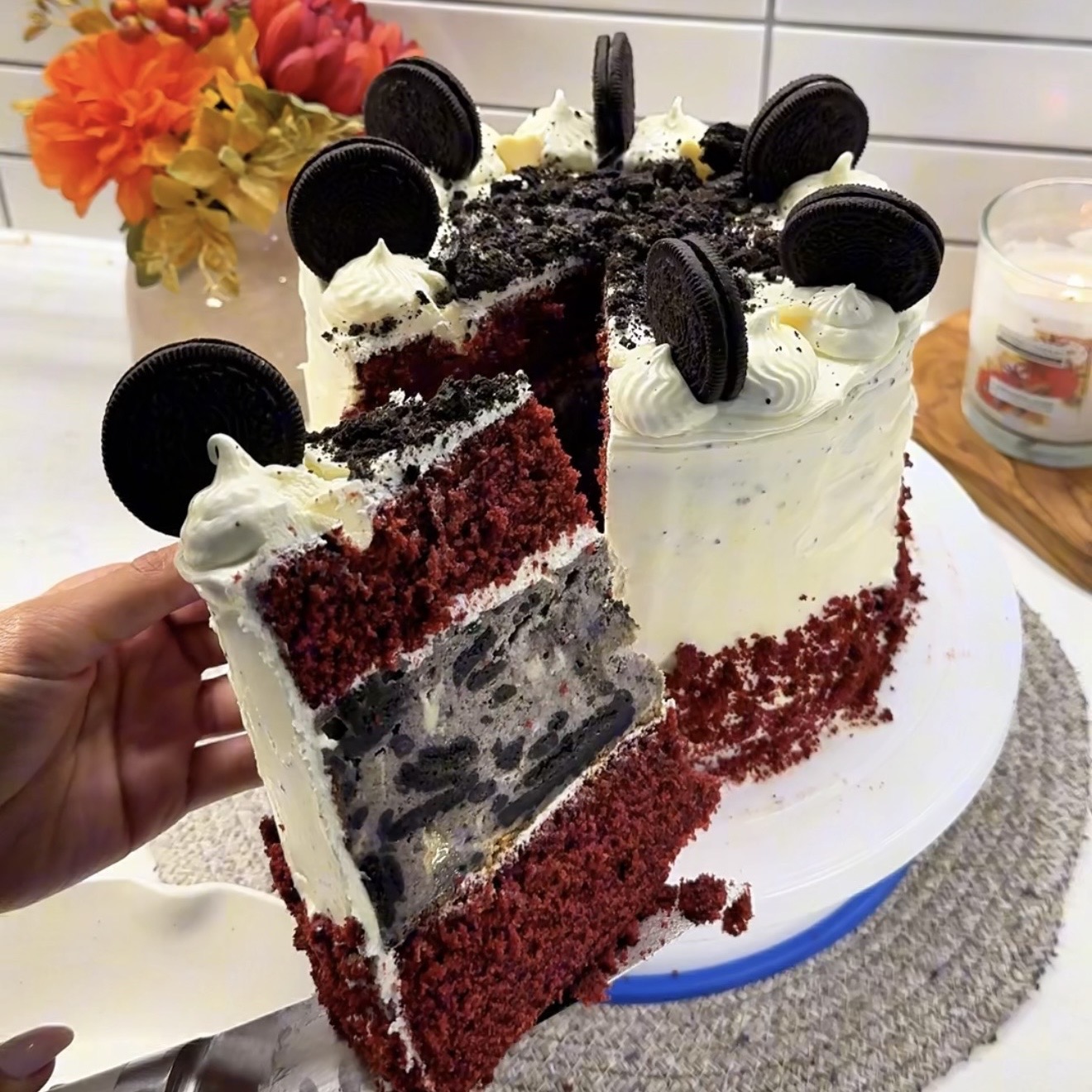
Try this recipe
Red Velvet Oreo Cheesecake Cake
Rich red velvet cake layered with creamy Oreo cheesecake and smooth cream cheese frosting.
View recipe →
5. Using old baking powder or bicarbonate of soda
If a cake that normally rises beautifully suddenly comes out flat, check your raising agents.
Baking powder and bicarbonate of soda don't stay effective forever. Once they've been sitting in the cupboard for a long time, they might not give your cake the lift it needs.
It's such a small ingredient, but it can make a huge difference to the finished sponge.
6. Opening the oven door too early
I know it's tempting to keep checking, especially when you can smell cake throughout the kitchen.
Opening the oven door too early causes a sudden drop in temperature while the structure of the cake is still developing.
That can contribute to the middle sinking. Try to leave the oven closed until you're close to the earliest suggested baking time.
7. Using the wrong size cake tin
Cake tin size can completely change how a recipe bakes.
Put the same amount of batter into a larger tin and you'll have a thinner cake that cooks much faster. Put it into a smaller tin and the outside can cook while the middle is still underbaked.
Whenever possible, use the tin size specified in the recipe. If you change it, expect the baking time to change too.
8. Baking at the wrong oven temperature
An oven that runs too hot can give you a cake that's dark on the outside but still underbaked in the centre.
An oven that's too cool can affect the rise and leave you waiting much longer than the recipe suggests.
Ovens aren't always as accurate as the number on the dial. If you bake regularly and your timings always seem very different from recipes, an inexpensive oven thermometer can be really useful.
9. Taking the cake out too early
A cake can look beautifully risen from the outside while the middle still needs a little longer.
Check the centre rather than relying only on colour. A skewer should come out clean or with a few moist crumbs, and the centre should gently spring back when touched.
If the middle still looks wet or wobbles when you move the tin, give it a little longer.
10. Leaving the cake in the oven too long
Then there's the opposite problem.
Even the softest cake recipe will eventually dry out if it stays in the oven for too long.
Recipe timings are always a guide because every oven behaves slightly differently. Start checking your cake around the earliest suggested baking time rather than automatically giving it a few extra minutes.
Once you learn how cakes look and feel when they're ready, it becomes much easier to judge them without relying completely on the timer.
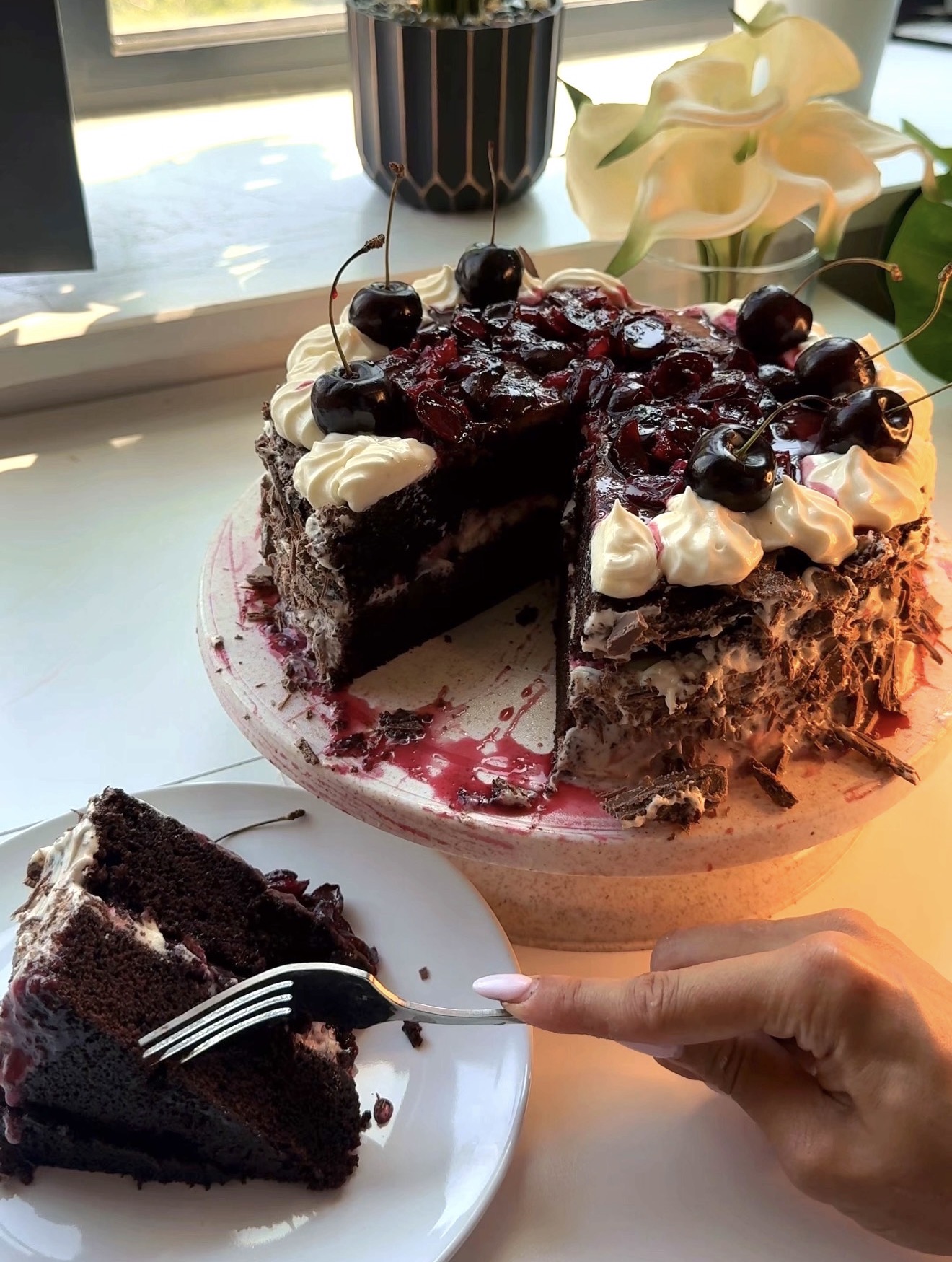
Try this recipe
Black Forest Gateau
Rich chocolate sponge layered with cherries and cream for a classic, indulgent celebration cake.
View recipe →
Why did my cake sink in the middle?
A sunken cake can have a few different causes, so don't immediately assume you've done one particular thing wrong.
Opening the oven too early, underbaking the centre, using too much raising agent or getting the ingredient quantities wrong can all contribute.
If it keeps happening with the same recipe, check your measurements, oven temperature and baking time first.
Why is my cake dense instead of fluffy?
Dense cake can come from overmixing, too much flour, ingredients at the wrong temperature or not incorporating enough air during the creaming stage.
Start by looking at how you measure your ingredients and how you mix the batter.
Small changes here can make a surprisingly big difference.
My biggest tip? Don't panic
Not every cake is going to come out absolutely perfect, and that's part of baking.
If something goes wrong, try to work out what happened rather than immediately deciding the recipe doesn't work.
Pay attention to your measurements, ingredient temperatures, mixing and oven. The more you bake, the easier it becomes to recognise what your cake batter should look and feel like.
And even if a cake sinks a little or comes out slightly wonky, there's a very good chance it still tastes lovely. Frosting can hide a multitude of sins. 😂
Ready to bake?
Browse more Made By Lai J baking recipes for cakes, cosy bakes and something sweet for your next baking day.
Browse recipes →